
Views: 0 Author: Site Editor Publish Time: 2026-04-08 Origin: Site


Is every Nylon Rope really the same? Not quite. Different types can vary in stretch, handling, strength, and daily use. In this article, we compare nylon rope brands and types, explain the key differences, and show how to choose the right option for real applications.
Nylon Rope is a synthetic rope made from nylon fibers. It is known for strength, flexibility, and shock absorption. For first-time buyers, it is a practical material because it can handle pulling force while still staying easy to use in many working conditions.
People compare Nylon Rope because it is not only one simple rope product. It can be made in different constructions and used for different tasks. That is why buyers usually look at the material first, then think about how the rope will perform in real use.
| Feature | What it means for buyers |
|---|---|
| Strength | It can handle demanding pulling tasks |
| Flexibility | It is easier to bend and use |
| Shock absorption | It helps reduce sudden impact under load |
Nylon Rope is widely used because it offers a strong balance of load performance and elasticity. It performs well when force changes during use. This makes it a practical option for buyers who need a rope that works in moving and demanding environments.
It is also popular because it fits many applications. In marine use, it helps absorb shock during docking or anchoring. In industrial use, it supports tasks that need reliable strength and flexible handling.
Strong load performance: It works well under pulling force and repeated use. This gives buyers more confidence in daily operations.
Good elasticity: It can stretch under pressure and reduce sudden shock. That is useful in conditions where movement and tension change often.
Wide application range: It suits both marine and industrial work. This makes it easier for buyers to choose it for different jobs.
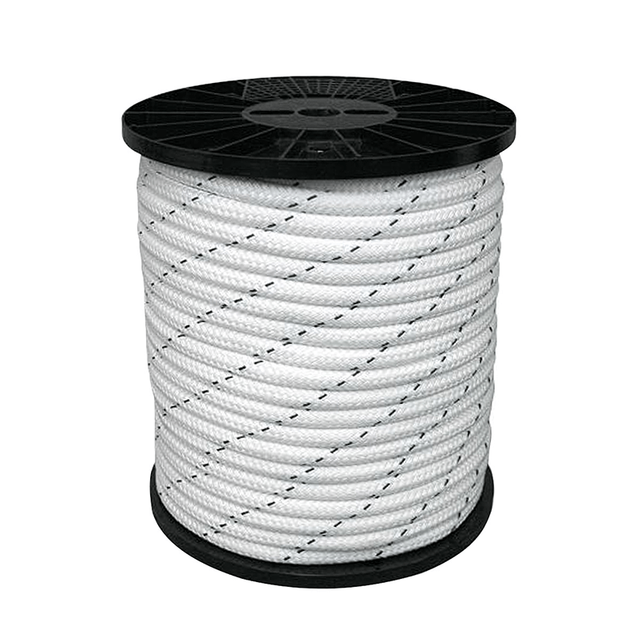
Different Nylon Rope types may use the same material, but they do not work in the same way. The main reason is construction. 3 strand Nylon Rope uses a twisted form, so it feels more traditional in marine use. 8 strand Nylon Rope uses a plaited structure, so it often feels more balanced and more organized during operation. Double braided Nylon Rope has an inner core and an outer braided cover, so it usually feels smoother and more structured in demanding tasks.
On the New Coast Rope website, these are presented as separate product forms. That helps readers see that they are not just different names. They are different Nylon Rope options for different handling styles and working conditions.
| Nylon Rope Type | Structure | Main Handling Feel | Common Use Direction |
|---|---|---|---|
| 3 strand Nylon Rope | Twisted | Traditional and practical | General marine work, anchoring, docking |
| 8 strand Nylon Rope | Plaited multi-strand | More balanced and organized | Heavy mooring, marine operations |
| Double braided Nylon Rope | Core plus braided outer cover | Smoother and more controlled | Boating, rigging, industrial handling |
Rope construction directly affects how Nylon Rope performs under load. Even when the material stays the same, the rope can still feel very different in actual use. Some types stretch more under force. Some keep shape better. Some feel softer and easier to control during repeated handling.
3 strand Nylon Rope is often valued for stronger stretch response and shock absorption. 8 strand Nylon Rope still offers strength and elasticity, but it can feel more stable in demanding marine conditions. Double braided Nylon Rope often gives a more controlled balance of strength, flexibility, and surface durability, which makes it useful in more demanding applications.
Strength: Construction changes how force is distributed through the rope. A more advanced structure can feel more stable during heavier work.
Stretch: Nylon is known for elasticity, but rope form still matters. Some constructions respond more clearly to changing tension and shock.
Flexibility: A rope may be strong, but still feel very different in the hand. Construction affects softness, control, and overall movement.
In daily use, rope choice depends on more than load performance. Splicing, handling, and storage also matter. A rope may look strong in a specification list, but if it is difficult to work with, it may not fit the job well.
3 strand Nylon Rope is usually seen as the simpler option for splicing. Its structure is more direct, so it fits traditional rope work well. 8 strand Nylon Rope often feels neater in use and can stay more organized during storage. Double braided Nylon Rope is often preferred for smoother handling and a cleaner surface feel, though it is usually less direct when splicing is required.
For easier splicing: 3 strand Nylon Rope is usually the more straightforward option. Its form is familiar and practical.
For smoother handling: Double braided Nylon Rope often feels more controlled. It can move more smoothly during regular use.
For cleaner storage: 8 strand and double braided forms often feel tidier. That can help in marine settings where rope management matters.
Heavy-duty performance depends on the task itself. Some jobs need a practical rope for general use. Others need stronger abrasion resistance, more stable handling, or a more structured rope for marine and industrial work. That is why Nylon Rope should be matched to load conditions, movement, and surface wear.
In many general applications, 3 strand Nylon Rope is a solid and practical choice. 8 strand Nylon Rope usually fits heavier marine work better because it gives a stronger-duty feel and a more balanced structure. Double braided Nylon Rope is often the better option when the goal is higher overall performance in strength, smooth handling, and abrasion resistance. On the New Coast Rope site, this comparison feels natural because the Nylon Rope range is already divided into clear structural options.
General-use direction: 3 strand Nylon Rope fits tasks that need a simple and proven rope form. It works well where practical handling matters most.
Heavier marine direction: 8 strand Nylon Rope is often a better fit for stronger marine demands. It offers a more robust working feel.
Higher-performance direction: Double braided Nylon Rope suits applications that need stronger structure and better surface durability. It is often the more advanced choice for demanding use.
For docking and mooring, the right Nylon Rope should do three things well. It should absorb shock, resist surface wear, and stay comfortable during repeated handling. Boats move all the time. The rope must respond to pull, release, and sudden tension changes without feeling too stiff or too harsh in daily use.
In this kind of work, 3 strand Nylon Rope and double braided Nylon Rope are often the most practical options. 3 strand Nylon Rope is useful when strong stretch and simple handling matter most. It helps reduce sudden force during movement at the dock. Double braided Nylon Rope is often preferred when smoother handling and a cleaner surface feel are more important, especially in regular docking routines.
Shock absorption matters first: Docking lines deal with repeated movement. A Nylon Rope type that can stretch and respond to changing tension usually performs better in this setting.
Wear resistance matters next: The rope may rub against cleats, posts, or rough surfaces. A stronger outer structure can help it stay in better condition over time.
Handling comfort also matters: Dock lines are used again and again. A rope that feels smoother and easier in the hand can make daily use more practical.
Anchor applications place more attention on elasticity and load response. When water, wind, and boat movement keep changing, the rope must react in a stable way. It should absorb sudden pull instead of passing too much force straight through the system. That is one reason Nylon Rope remains a strong choice for anchor lines.
In many anchoring situations, 3 strand Nylon Rope is a common and practical option because it offers strong stretch response and a simple structure. It works well when shock absorption is a priority. 8 strand Nylon Rope can also fit anchoring needs in setups where a more balanced rope body and neater rope management are preferred. On the New Coast Rope site, this comparison feels natural because the nylon range already includes both general rope constructions and anchor-focused products.
| Application | Most Suitable Nylon Rope Type | Main Reason |
|---|---|---|
| Docking and mooring | 3 strand / Double braided Nylon Rope | Good shock absorption or smoother handling |
| Anchor lines | 3 strand / 8 strand Nylon Rope | Elastic response and better control under pull |
| Marine engineering | 8 strand / Double braided Nylon Rope | Higher strength and stronger wear resistance |
| General-purpose use | 3 strand Nylon Rope | Simple, flexible, and easy to select |
Elasticity is a key advantage: Anchor lines work under changing load. A rope that can absorb motion usually gives more stable performance.
Load response should stay controlled: The rope should not feel too rigid in moving water. A more suitable Nylon Rope type can respond more smoothly.
Structure still affects use: Even in the same material, one rope form may suit anchoring better than another because of stretch and handling style.
Marine engineering and heavy industrial tasks usually need more from a rope. Strength matters more. Abrasion resistance matters more. Long-term durability also becomes more important because the rope may face harder surfaces, heavier loads, or more demanding work cycles.
For these conditions, 8 strand Nylon Rope and double braided Nylon Rope are often the stronger choices. 8 strand Nylon Rope usually gives a heavier-duty feel and a more balanced structure for marine operations. Double braided Nylon Rope often adds smoother handling and stronger surface durability, which helps in applications where both control and wear resistance matter. In the New Coast Rope range, these types fit naturally into more demanding use cases because they move beyond simple general-purpose rope design.
Higher strength is often needed: Heavy work places more force on the rope. A more advanced construction can offer a better fit for these conditions.
Abrasion resistance becomes more important: Industrial and engineering environments can be rougher. A rope needs to handle more contact and more repeated wear.
Durability supports longer service life: In demanding work, rope replacement can affect time and cost. A stronger Nylon Rope structure often makes more sense.
For general-purpose use, the best Nylon Rope is usually the one that stays simple, flexible, and easy to work with. It should fit common tasks without making selection too complicated. In many cases, 3 strand Nylon Rope is the most practical starting point because it is easy to understand, easy to handle, and suitable for many routine applications.
This type works well when the goal is not extreme performance in one direction, but a useful balance across several needs. It offers stretch, flexibility, and straightforward handling. That makes it a strong option for common marine work, light anchoring, and general utility tasks. On the New Coast Rope website, this kind of selection feels clear because the product range moves from basic rope forms to more specialized structures.
It stays easy to select: General-purpose use usually calls for a rope that does not require a highly specialized setup. A simpler Nylon Rope type often works best.
It remains flexible in daily work: Common tasks may change from one job to another. A rope that adapts easily is more practical.
It supports straightforward handling: For regular use, comfort and familiarity matter. A rope that feels direct and usable can save time in daily operation.
Choosing the right Nylon Rope from New Coast Rope starts by looking at product form, not just product name. The company offers several Nylon Rope options, including 3 strand Nylon Rope, 8 strand Nylon Rope, double braided Nylon Rope, as well as finished products such as nylon dock line and nylon anchor line. Each one is built for a different use direction, so the comparison should begin from construction and intended application.
A simple way to compare them is to ask two questions first. How is the rope built, and where will it be used? A twisted construction often fits more traditional and general rope work. A plaited or braided construction usually fits applications that need a more structured feel, smoother handling, or stronger surface durability. On the New Coast Rope site, this comparison is fairly clear because the Nylon Rope range is already divided into separate product types rather than one mixed category.
| New Coast Rope Product | Construction or Product Form | Best Fit by Intended Use |
|---|---|---|
| 3 strand Nylon Rope | Twisted rope construction | General marine work, light anchoring, practical daily use |
| 8 strand Nylon Rope | Plaited multi-strand rope | Heavy mooring, stronger marine operations |
| Double braided Nylon Rope | Core plus braided outer cover | Smoother handling, rigging, demanding marine or industrial use |
| Nylon Dock Line | Application-specific finished rope | Docking, mooring, repeated movement at berth |
| Nylon Anchor Line | Application-specific finished rope | Anchoring, wave response, changing pull conditions |
General Nylon Rope usually refers to rope sold by construction type, such as 3 strand, 8 strand, or double braided. These product names explain how the rope is made. They help readers compare structure, handling feel, and performance direction. This is useful when the choice starts from technical preference or from a need to match rope construction to a specific working condition.
Dock line and anchor line products are different because they are presented by application first. Instead of focusing mainly on rope construction, they focus on actual use. A dock line is meant for docking and mooring routines, where movement, shock absorption, and repeated handling matter. An anchor line is meant for anchoring conditions, where elasticity and controlled load response are more important. This makes finished rope products easier to understand when the main question is not how the rope is built, but what the rope needs to do.
That difference matters in product selection. If the requirement begins from use scene, a finished application product may be the clearer choice. If the requirement begins from rope form, a general Nylon Rope construction may be the better starting point. New Coast Rope supports both paths, which makes its Nylon Rope range easier to work through.
Before ordering Nylon Rope, it helps to slow the decision down and ask a few practical questions first. This makes the selection clearer and reduces the chance of picking a rope that sounds suitable but does not perform well in real use. Since New Coast Rope offers both standard rope constructions and application-based products, this kind of check is especially useful.
What will the Nylon Rope be used for?
Start from the actual job, not the product name. Docking, anchoring, general marine work, and heavier industrial tasks often require different rope characteristics. Once the application is clear, it becomes much easier to narrow the choice.
Which rope construction is the better fit?
Different constructions perform differently in use. A 3 strand Nylon Rope is often a practical option for simple, general tasks. An 8 strand Nylon Rope may fit heavier marine use better. A double braided Nylon Rope may be more suitable when smoother handling and stronger surface durability are needed.
What diameter is needed?
Diameter affects both handling and working strength. A rope should not be selected by material alone, because size also changes how it performs in the application. It should match the actual load condition and the way the rope will be used.
How much load will the rope handle?
This helps determine whether a general-use rope is enough or a stronger-duty structure is needed. It is better to think about actual working force, repeated tension, and possible shock during use. That gives a more realistic direction for product selection.
How important are flexibility and shock absorption?
Some applications involve frequent movement and changing pull. In those cases, elasticity becomes more important. Other tasks may require a rope that feels more controlled and stable during handling, so construction plays a bigger role.
Is a standard rope enough, or is a more specific product better?
Sometimes a general Nylon Rope construction works well. In other cases, a nylon dock line or nylon anchor line may be the more practical choice because the product is already aligned to a clear use scene. On the New Coast Rope site, this makes the selection process more direct.
Choosing the right Nylon Rope depends on application, construction, and handling needs. New Coast Rope makes this easier through 3 strand, 8 strand, double braided, dock line, and anchor line options. Its range helps users match strength, stretch, and durability to real working conditions.
A: Nylon Rope is a strong synthetic rope known for flexibility and shock absorption.
A: Nylon Rope for docking should offer stretch, comfort, and good wear resistance.
A: Yes. It offers useful elasticity and simple handling for anchor use.
A: It usually gives smoother handling, stronger structure, and better surface durability.
A: Check application, rope type, diameter, load needs, and flexibility first.


